ECS members
Chairs

Dr Fernanda Maciel (Co-Chair) is an Assistant Professor at the University of the Republic (Universidad de la República, Uruguay), where she currently co-leads a research group in “Hydro-environmental Engineering for Coastal and Inland Waters”, which aims to combine the use of numerical modeling, in-situ measurements and remote sensing to improve management of water resources. She holds a professional title of Civil Engineer in Uruguay, with a focus in hydraulics and environmental engineering. Her graduate studies were at the University of Illinois at Urbana-Champaign (USA), where she earned in 2015 a M.Sc. degree in Civil Engineering (in Energy-Water-Environment Sustainability) under a Fulbright scholarship, and at the University of the Republic (Uruguay), where she earned in 2022 a Doctorate degree in Engineering-Applied Fluid Mechanics.
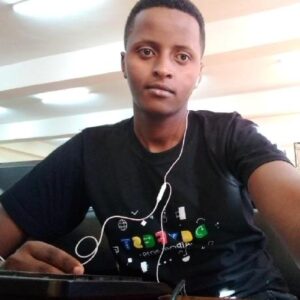
Wanjohi Christopher (Co-Chair) is currently co-lead at Google Earth Engine Community Nairobi (GEEDEVS Nairobi). He is also a Data Analytics MSc Scholar from the School of Engineering, Catholic University of America. He is also a member of the UNEP World Water Quality Alliance Earth Observation workstream. Christopher has a background in data engineering and is an AWS Community Builder (Data). He has a B.S in Industrial Mathematics from Jomo Kenyatta University of Agriculture and Technology. He also leads a Carboncane project focused on monitoring carbon emissions in the sugarcane sector. His research interest lies in GeoAI, with a focus on water quality monitoring and climate change, applying machine learning techniques to geospatial data.
Joseph Kathuya and Lukumon Lateef – Vice-Co-Chairs – photos and bios coming soon!
Past Chairs
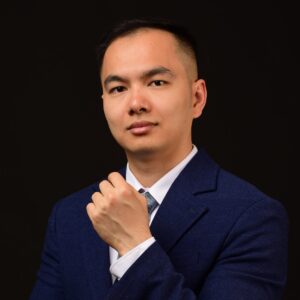
Dr Duy Nguyen (current Advisor and past Co-Chair) is currently an “Impossible Without You” Research Fellow in the CSIRO Environment Research Unit, with expertise in Environmental Fluid Dynamics, turbulence modelling, numerical methods, and water quality modelling. His research involves hydrodynamic and water quality modelling of oceans, lakes, and rivers, combined with emerging satellite and hyperspectral and multispectral imagery technologies, and in situ and remote sensing of water quantity and quality. Duy is also a key model developer and a project lead at the CSIRO AquaWatch Program and the Digital Water & Landscapes Program, where he integrates process-based, AI/ML, and large data streams from remote sensing to model and forecast water quality and quantity.
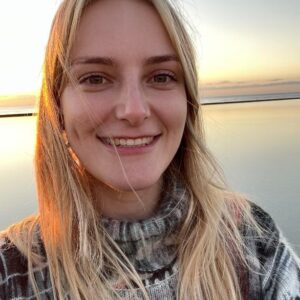
Dr. Harriet Wilson (Past Co-chair) is a research scientist in the Earth and Planetary Observation Research Group at the University of Stirling in Scotland. She is currently serving as the co-vice-chair of the GEO AquaWatch Early Career Society and is also leading the UNEP World Water Quality Alliance Earth Observation workstream. Dr Wilson holds a Ph.D. in physical limnology, focussing on the impact of climate change and extreme events on lakes, and was a Marie-Curie scholar, trained within the Innovative Training Network “MANTEL”. Her current research interests focus on understanding how satellite remote sensing of aquatic ecosystems can be more widely used within the water industry and to benefit communities and individuals.
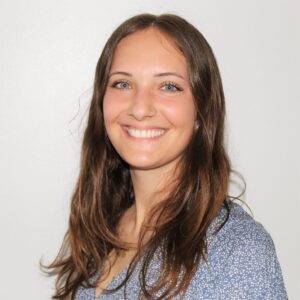
Dr. Megan Coffer (Past Co-Chair) is a research scientist in NOAA’s Center for Satellite Applications and Research through Global Science & Technology, Inc. Dr. Coffer joined NOAA in 2022 after completing a postdoctoral fellowship at the U.S. EPA. She holds a Ph.D. in Geospatial Analytics and a M.S. in Atmospheric Science, both from North Carolina State University, and a B.S. in Mathematics from Meredith College. Her research interests focus on satellite remote sensing technologies to study aquatic ecosystems, including monitoring cyanobacterial blooms in inland lakes and reservoirs and mapping seagrass extent along the coast.
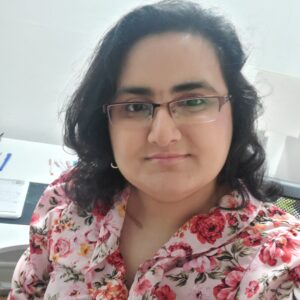
Rabia Munsaf Khan (Past Co-Chair) is a Fulbright doctoral candidate at the State University of New York – College of Environmental Science and Forestry (SUNY ESF), specializing in geospatial information science and engineering. Her research focus lies at the intersection of technology and environmental sustainability, with a particular emphasis on leveraging geospatial data to address pressing issues such as water quality to achieve sustainable development goals (SDGs). Rabia earned her Master’s degree in Remote Sensing and Geographic Information Science (GISc) from the Institute of Space Technology, where she graduated summa cum laude, topping her class. She also holds a distinguished gold medal in BS Hons Space Sciences from the University of The Punjab.
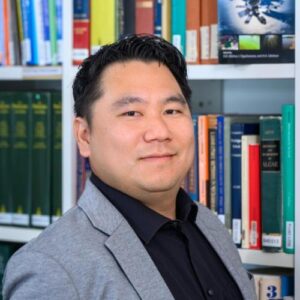
Dr Igor Ogashawara (Past Co-Chair) research uses remote sensing techniques to monitor water quality, especially from inland aquatic systems. He is currently the director of the new GEO Aquawatch Cal/Val Thematic Node based at IGB-Berlin and a postdoctoral researcher at the Leibniz Institute of Freshwater Ecology and Inland Fisheries (IGB) working on developing new algorithms and satellite imagery processing data scheme to support the water quality management in Northern German Lakes within the Leibniz Association funded CONNECT Project. Additionally, he is IGB’s leader within the EU H2020 Project “Water scenarios For Copernicus Exploitation” (Water-ForCE) which will develop a Roadmap for Copernicus water services (waterforce.eu). He is also a co-editor for the book “Remote Sensing and Bio-optical Modeling for Inland Waters”.

Dr. Kate Fickas (Past Co-Chair) is the Director of Imagery and Remote Sensing Solutions at Esri. With over 10+ years of experience in earth observation and remote sensing with experience across commercial industry, academia, state government, and federal government, Dr. Kate Fickas is the Director of Imagery and Remote Sensing Solutions at Esri. Her goal is to break down barriers to entry into the world of earth observation and help the community derive meaningful insight with powerful tools.
Regular members
This list in not exhaustive. Head shot and bio are not obligatory for regular ECS members.
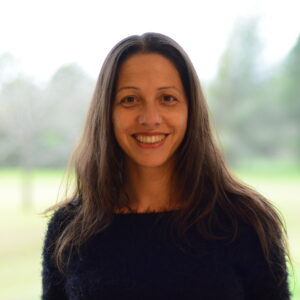 Dr. Anabella Ferral Dr. Anabella Ferral |
Dr Anabella Ferral received her PhD in Chemistry and her MSc. in Space Applications for Early Warning and Response to Emergencies from the National University of Córdoba (UNC), Argentina. She worked for the Secretary of Water Resources of Córdoba province and was the Head of the Master’s Degree in Spatial Information Applications at the Gulich Institute (which belong to CONAE, National Space Agency) from 2015 to 2020. Currently she works at Gulich Institute as a Professor in environmental remote sensing courses and as a Researcher of the National Council of Scientific and Technical Research of Argentina (CONICET). She was Member of the organising committee of the Spring School on Remote Sensing (2016, 2017, 2018 and 2021), organized jointly with IEEE-GRSS Argentine Chapter. She made a research stay at the Royal Military Academy of Belgium to work with hyperspectral data during 2022. Her research focuses on remote sensing of water resources’s environmental quality indicators within the framework of the Sustainable Development Goals (SDGs), through the integration of satellite data, numeric simulations, field campaigns, and laboratory measurements. Since September 2023, she has served as Associate Editor of the Geoscience and Remote Sensing Magazine published by IEEE-GRSS. She joined GEO AquaWatch community after participating in “Water talks webinars” in October 2023. |
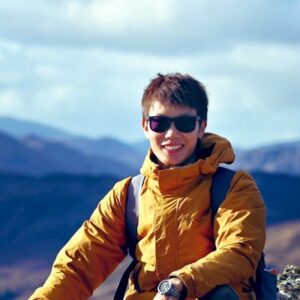 Dr. Dalin Jiang Dr. Dalin Jiang |
Dr Dalin Jiang received his PhD in remote sensing from the University of Tsukuba, Japan. He is now a research fellow at the University of Stirling, UK. His researches are mainly focusing on the development of algorithms for retrieving water quality variables including Secchi disk depth, total suspended solids (TSS), coloured dissolved organic matters (CDOM) from satellite images, and the application of Earth observation in understanding how climate change and human activities impact the aquatic ecosystems. He has led/joined field campaigns in inland, coastal and open ocean waters in China, Japan, Indonesia, UK, Portugal, Romania, and Italy. He participated and works on European Union Horizon-2020 funded projects (e.g., CoastObs, MONOCLE, CERTO, DOORS), and the European Space Agency (ESA) funded Lakes_cci project. |
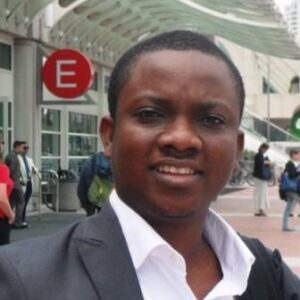 Mr. David Tolu Afolayan Mr. David Tolu Afolayan |
David Tolu Afolayan is a strong advocate for sustainable development, the Chief Executive Officer of GIS Konsult Ltd and also a Business Partner to Environmental Systems Research Institute ESRI, California. David provides education and professional consultancy services for both public and private sector on the strength of the Geographical Information Systems GIS technology. David has a Bachelor’s degree in Architecture from the Federal University of Technology, Akure and a Master of Science degree in the Geographic Information Systems (GIS) from the University of Ibadan, Nigeria. David is the deputy Chair of the Geospatial Society of Nigeria, GEOSON, Oyo State Chapter. In 2020 David was appointed a member of Oyo State COVID-19 Containment Committee, to develop and implement a novel and effective geo-intelligence driven strategy that combined the indigenous practice of community engagement to contain COVID-19. David was also appointed a member of an ad hoc Digital Literacy Implementation Committee (DLIC) in 2021 to accelerate digital transformation in Southwest Nigeria. |
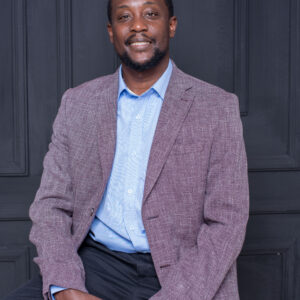 Mr. James Wanjohi Nyaga Mr. James Wanjohi Nyaga |
Mr. James Wanjohi Nyaga is currently a project coordinator with the Regional Center for Mapping of Resources for Development (RCMRD), an inter-governmental institution based in Nairobi, Kenya with 23 country membership in East and South Africa. He has led the implementation of satellite based water quality mapping and monitoring of in-land lakes in East Africa, including Lake Victoria, Lake Tanganyika and Lake Malawi. He has contributed to the analysis and production of water quality indicators such as Chlorophyll-a, Lake Surface Temperature, and Secchi Depth, and remote sensing of invasive floating vegetation (Hyacinth) using a multi-sensor approach. He holds an Msc in Meteorology, with over 13 years of professional experience, and has current interest in water quality modeling using SWAT and disaster risk management. |
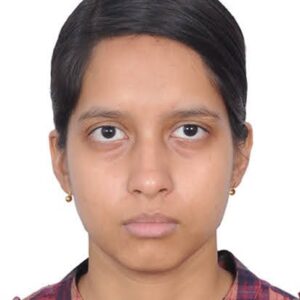 MSc. Sumita Bhattacharyya MSc. Sumita Bhattacharyya
|
Sumita Bhattacharyya is a PhD candidate at Manipal Academy of Higher Education (MAHE), conducting her research at the Ashoka Trust for Research in Ecology and the Environment (ATREE), Bengaluru. Her research focuses on understanding the linkages between water chemistry, aquatic macrophytes and avian composition and stakeholders’s usage of urban lakes in tropical regions. The synthesis of the research would aid in developing rejuvenation or management targets related to lake water quality and allow for citizen based monitoring of the lake water quality. She has worked in Sustainable Use of Natural Resources to Improve Human Health and Support Economic Development (SUNRISE) programme delivering National Capability, funded by the UK Natural Environment Research Council.
Sergio Cárdenas is a geoscience PhD candidate from the Federal University of Rio Grande do Sul. He researches coastal and marine processes using remote sensing at the Centre for Coastal and Oceanic Geology Studies. He possesses expertise in geospatial data management, earth observation tools, and environmental geology. His current research focuses on sediment transport dynamics from sink to source in coastal environments, as well as the effects of human activities and climate change on these processes. |
 Mr Sergio Molano Cárdenas